Americas
Welding fume extraction is essential for maintaining cleaner, safer air in workplaces where metalworking processes such as welding, laser cutting and plasma cutting take place. These operations can release harmful dust, fumes and smoke into the air, contaminating the work environment.
To maintain proper air quality and ventilation, facilities need an effective welding fume extraction system. A dust and fume collector—also known as a fume extractor—is designed to safely capture and remove airborne particles produced during these processes.
Fumes generated when working with high-alloy metals can contain harmful elements such as lead, nickel, chromium and mercury. Without adequate filtration, these particles can pose significant health risks to workers, and some metal dusts can also present combustible dust hazards. Welding fume extraction systems capture and filter these airborne contaminants, helping facilities maintain cleaner working environments and reduce employee exposure.
 Types of Welding Operations
Different welding methods emit varying amounts and types of metal fumes. The appropriate welding fume extraction approach depends in part on the welding process, materials being welded, fume generation rate and facility conditions.
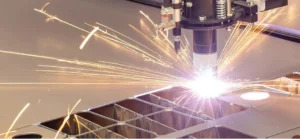
Welding and related thermal processes can generate fine airborne metal particles. During laser and plasma cutting, for example, intense heat melts metals such as stainless steel and aluminum. These processes can generate fumes containing hazardous substances, including hexavalent chromium when chromium-containing metals are processed.
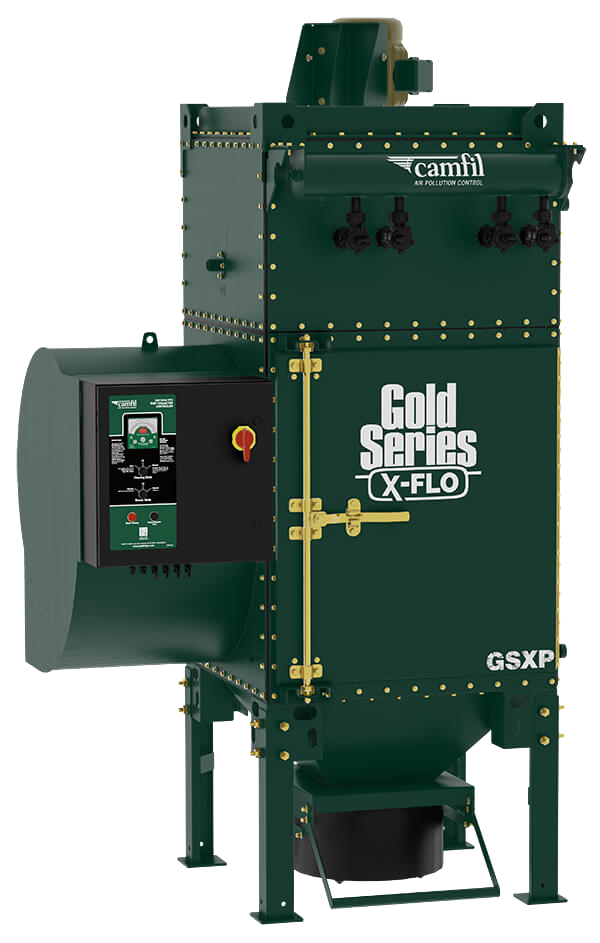
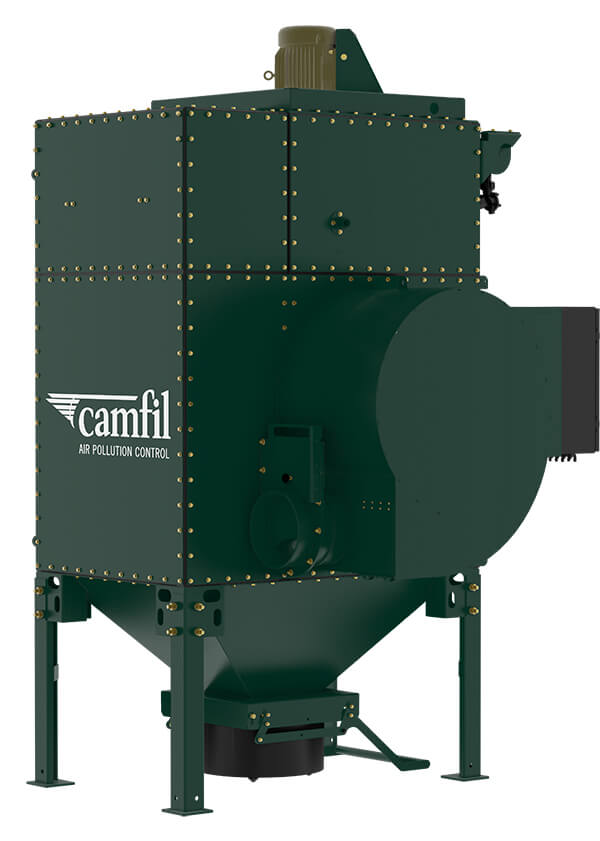
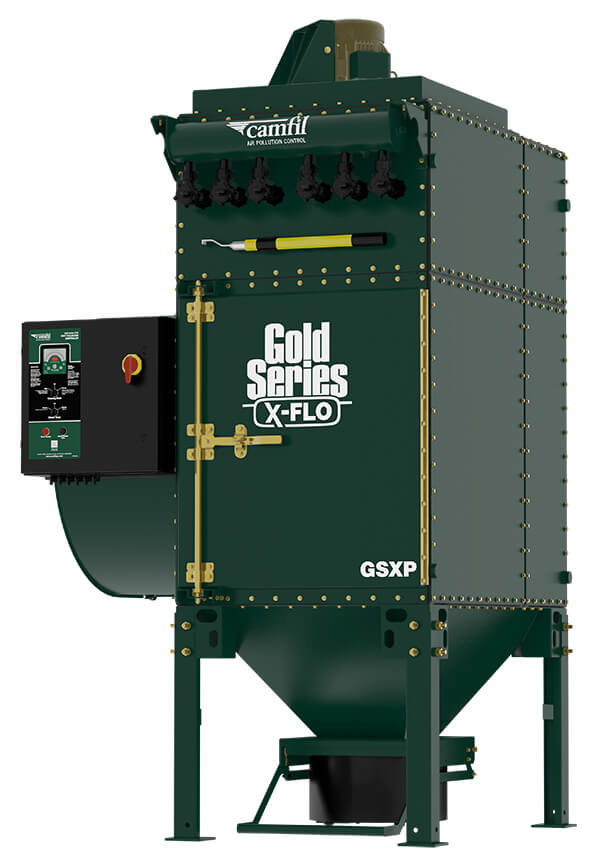
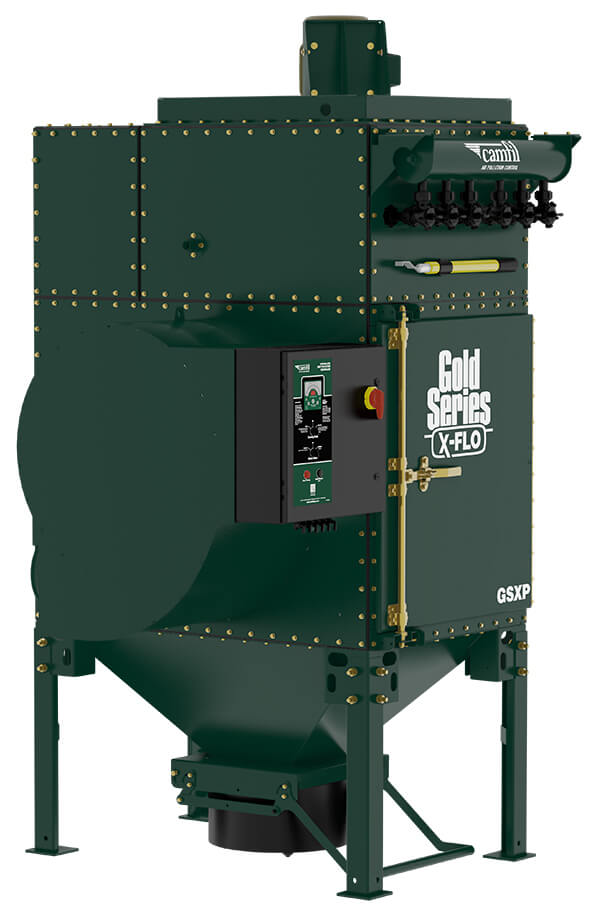
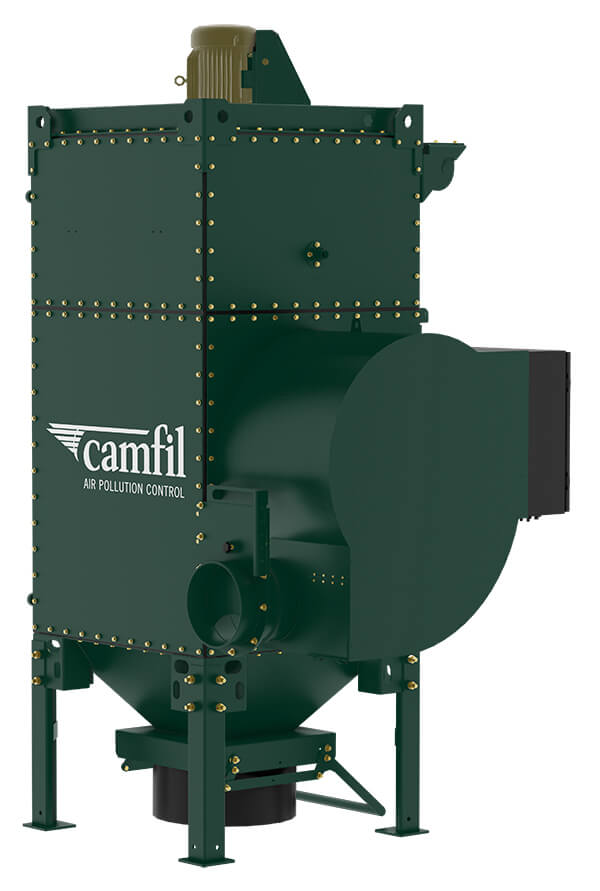
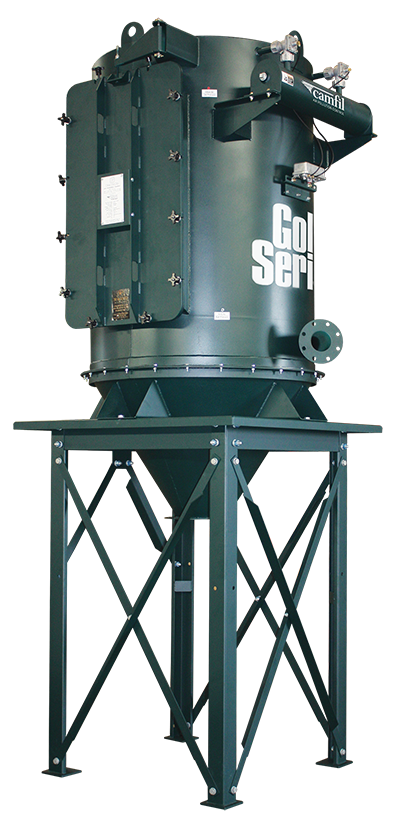
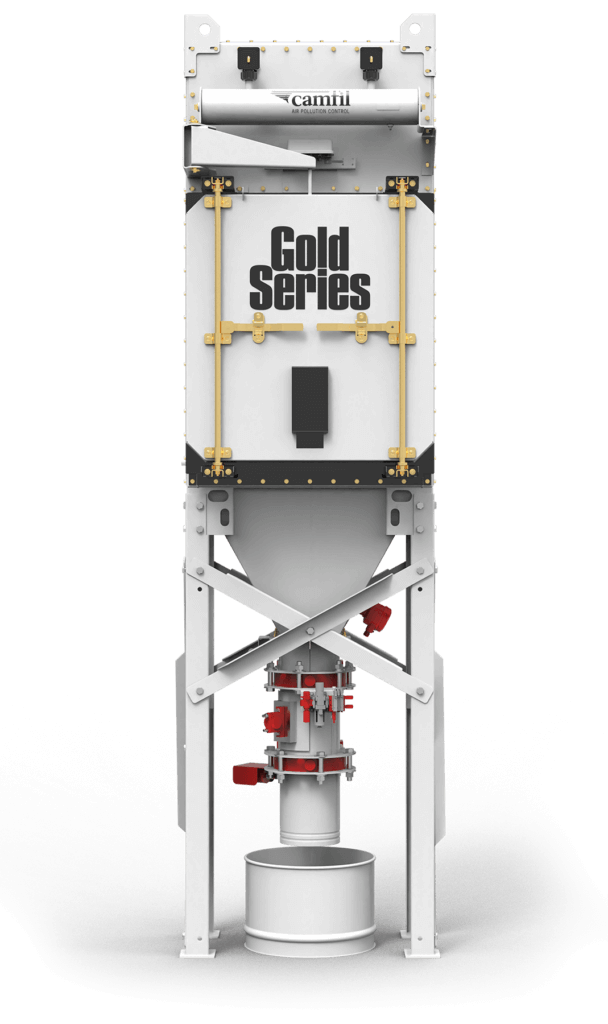
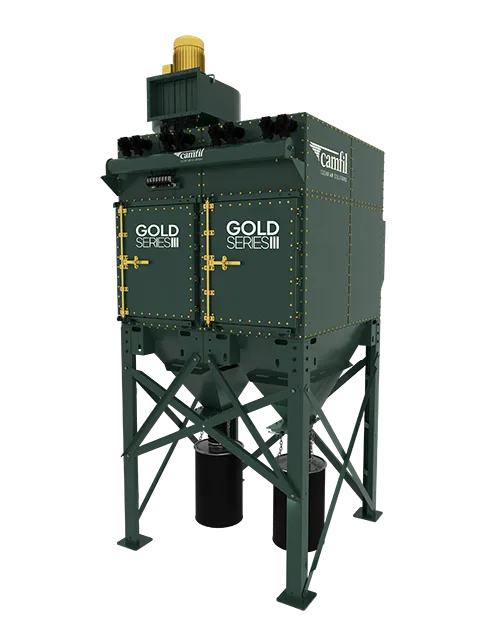
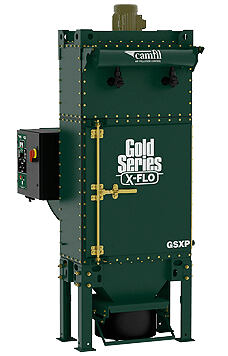
A properly designed fume extraction system, such as the Gold Series X-Flow Industrial Dust Collector, can effectively rid working environments of toxic welding fumes.
What Are Welding Fumes?
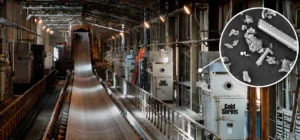
Fumes are a byproduct of many welding processes. Fumes are tiny particles of dry dust that become airborne when metals are welded. These fumes are a complex mixture of microscopic particles composed of various chemicals.
These particles are created when the intense heat from welding vaporizes metal, which then cools and condenses into fine particulates. Common elements found in metal fumes include lead, nickel, chromium, and mercury. These fumes can hang in the air and be inadvertently breathed in by workers, potentially leading to respiratory issues.
The Occupational Safety and Health Administration (OSHA) establishes permissible exposure limits (PELs) for various airborne contaminants. Effective welding fume extraction can be an important engineering control for reducing employee exposure to hazardous airborne particles and helping facilities meet applicable exposure requirements.
Dangers of Welding Fumes
Welding fumes may contain a combination of metals and compounds that present different health risks. Examples include:
- Zinc, aluminum, and magnesium oxide: Exposure to certain metal oxide fumes can cause metal fume fever, an illness with flu-like symptoms. These fumes may be generated during processes involving galvanized metals and other metalworking applications.
- Manganese: Present in many welding consumables. Exposure can affect the nervous system, and long-term exposure to elevated concentrations is associated with neurological effects.
- Chromium : Welding stainless steel and other chromium-containing materials can generate hexavalent chromium, a carcinogenic compound that can affect the respiratory system as well as the eyes, skin, nose and throat.
OSHA establishes permissible exposure limits for specific airborne contaminants. A properly designed welding fume extraction system helps capture these particles before they spread throughout the facility and enter workers’ breathing zones.
How Welding Fume Extraction Works
Historically, some facilities attempted to control accumulated welding fumes by opening doors and using general ventilation. However, simply diluting or exhausting contaminated air may not provide adequate control and may also be subject to environmental regulations governing hazardous air pollutants. The EPA National Emission Standards for Hazardous Air Pollutants (NESHAP) regulates emissions from certain operations and hazardous substances. Facilities should evaluate the regulations that apply to their specific processes and materials.
Standard HVAC systems alone are generally not designed to capture concentrated welding fumes at their source. Dedicated welding fume extraction provides a more effective method of capturing and filtering fine particulate generated during welding and related metalworking operations.
A dust and fume collection system equipped with high-efficiency cartridge filtration can capture weld smoke and other hazardous airborne contaminants from individual processing areas or larger portions of a facility.
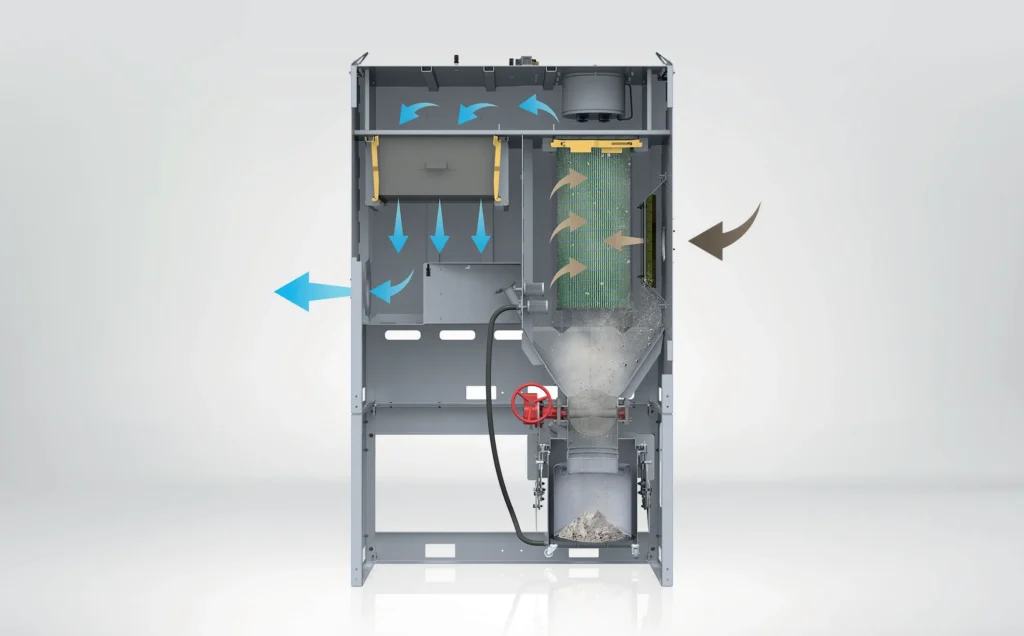
The system draws contaminated air into the collector, where filters capture particulate. Depending on the application and applicable regulations, filtered air may then be returned to the workplace or exhausted outside.
Effective welding fume extraction can improve indoor air quality, reduce airborne particulate and support a cleaner working environment.
Types of Welding Fume Extraction Systems
Welding fume extraction systems are available in several configurations depending on the process, facility layout, airflow requirements and frequency of use.
Portable units can be moved between work areas and positioned near the source of welding fumes. This makes them useful for applications where welding locations frequently change.
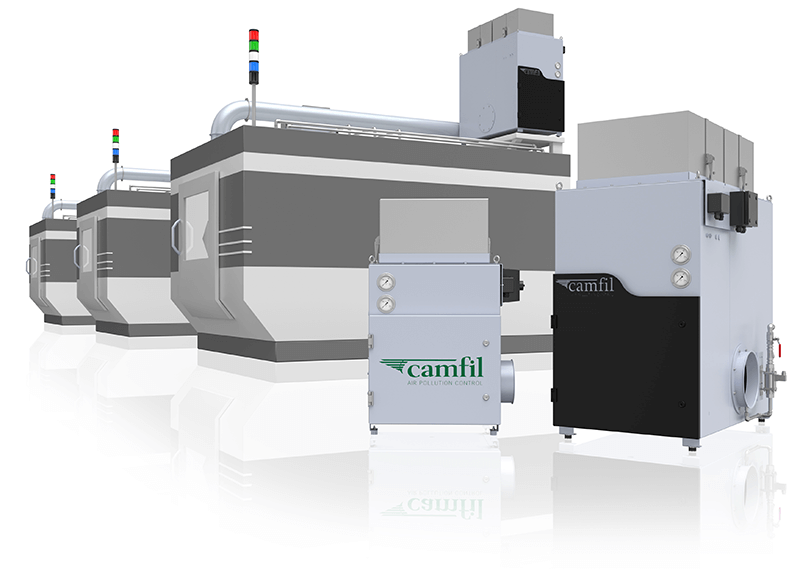
Central dust and fume collection systems are designed to serve larger manufacturing and processing areas. Modular systems can also be configured to meet specific airflow and filtration requirements.
Gold Series X-Flo Industrial Dust Collector
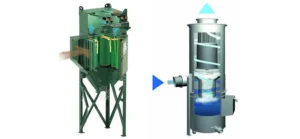
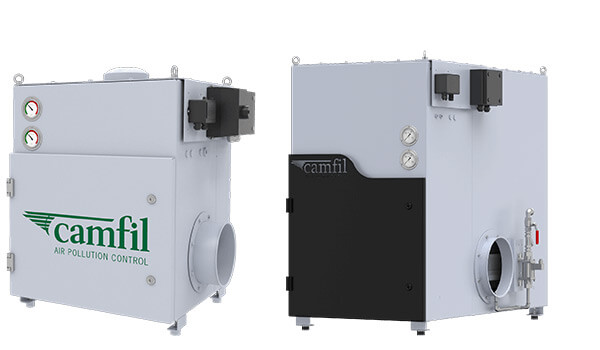
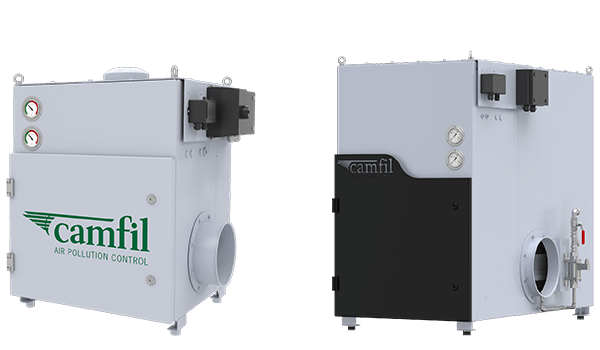
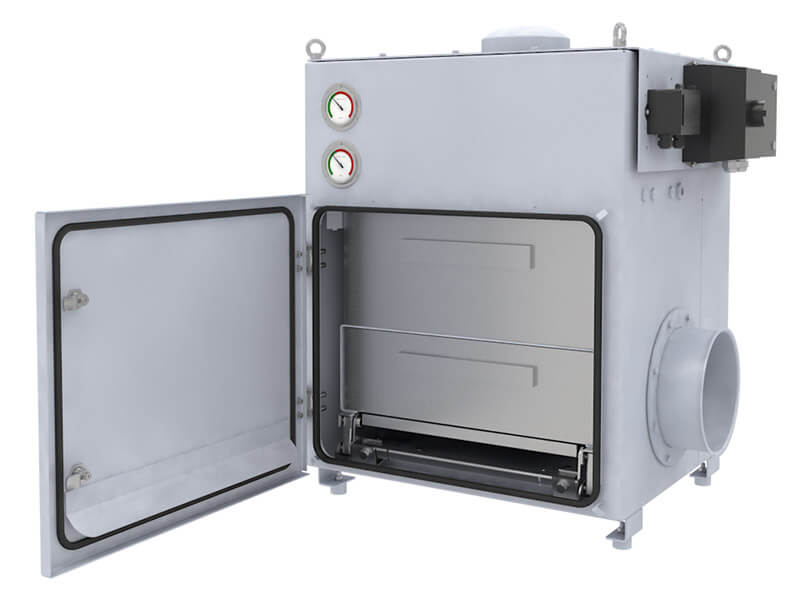
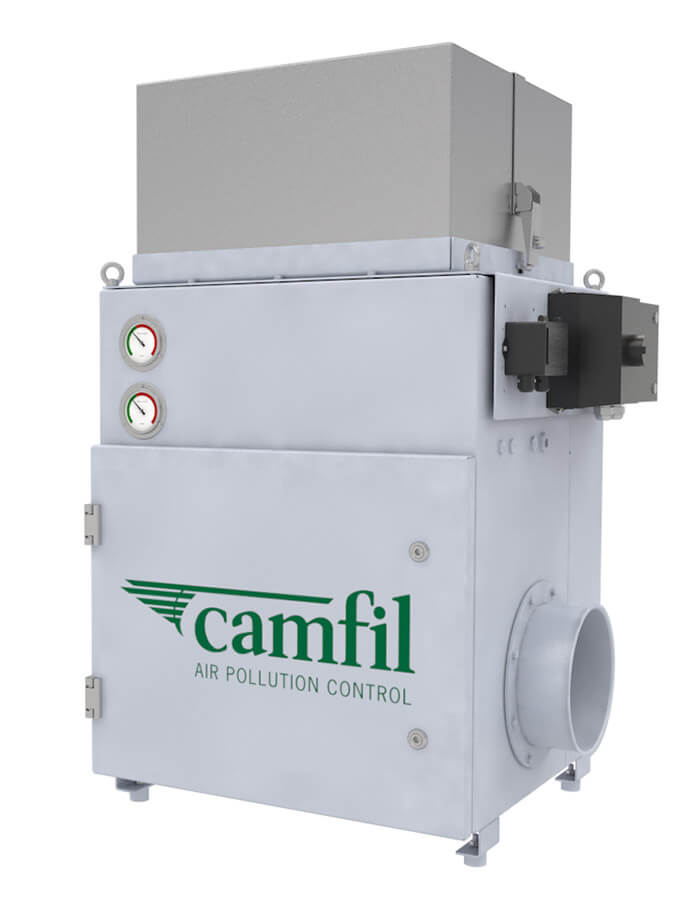
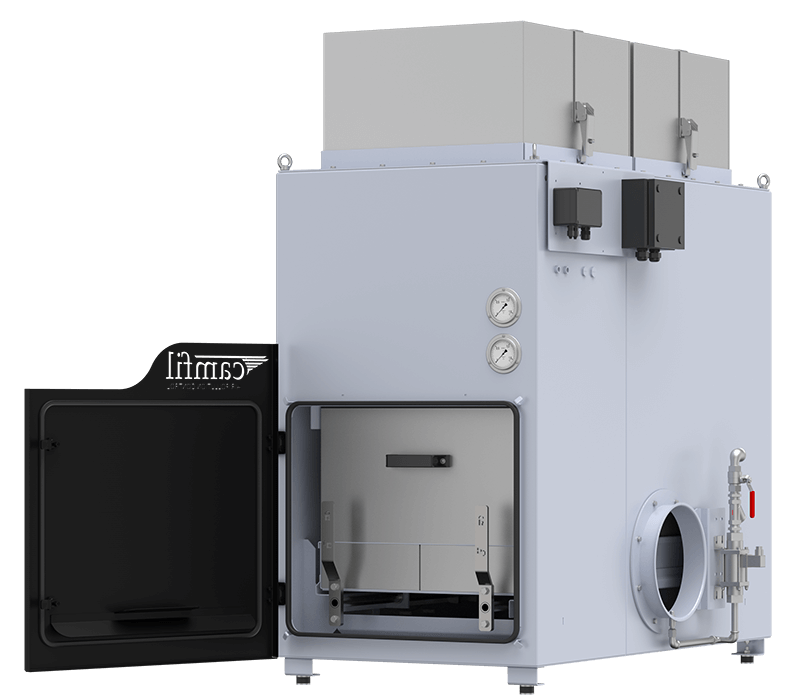
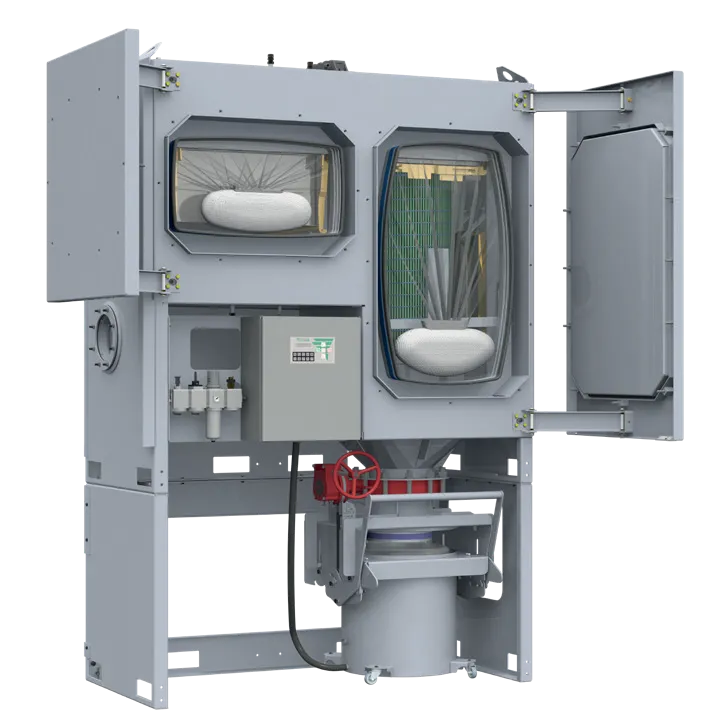
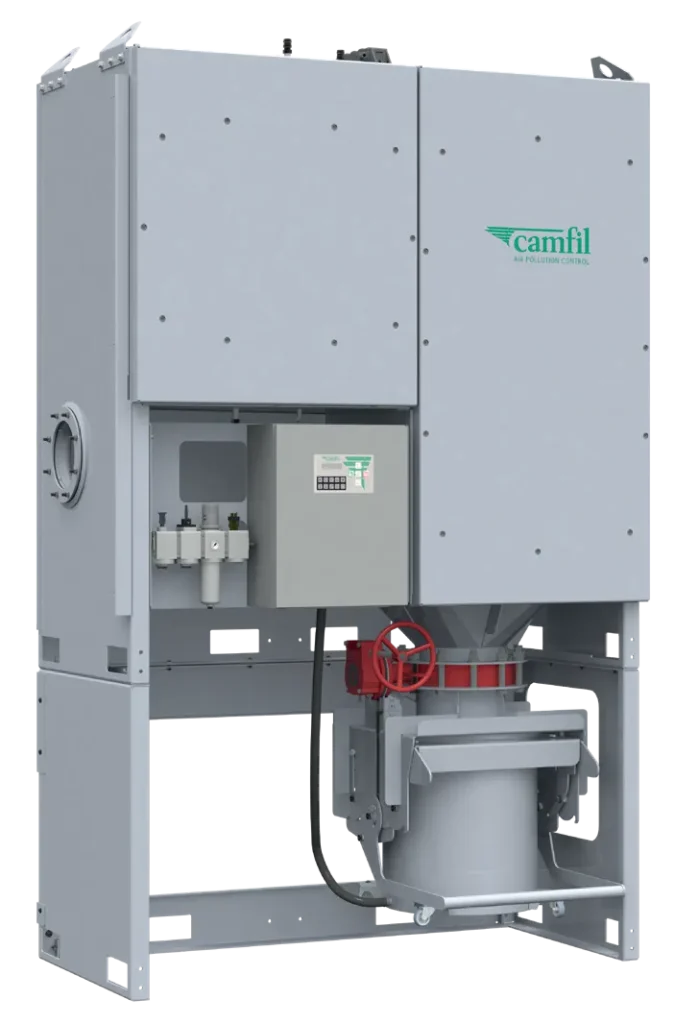
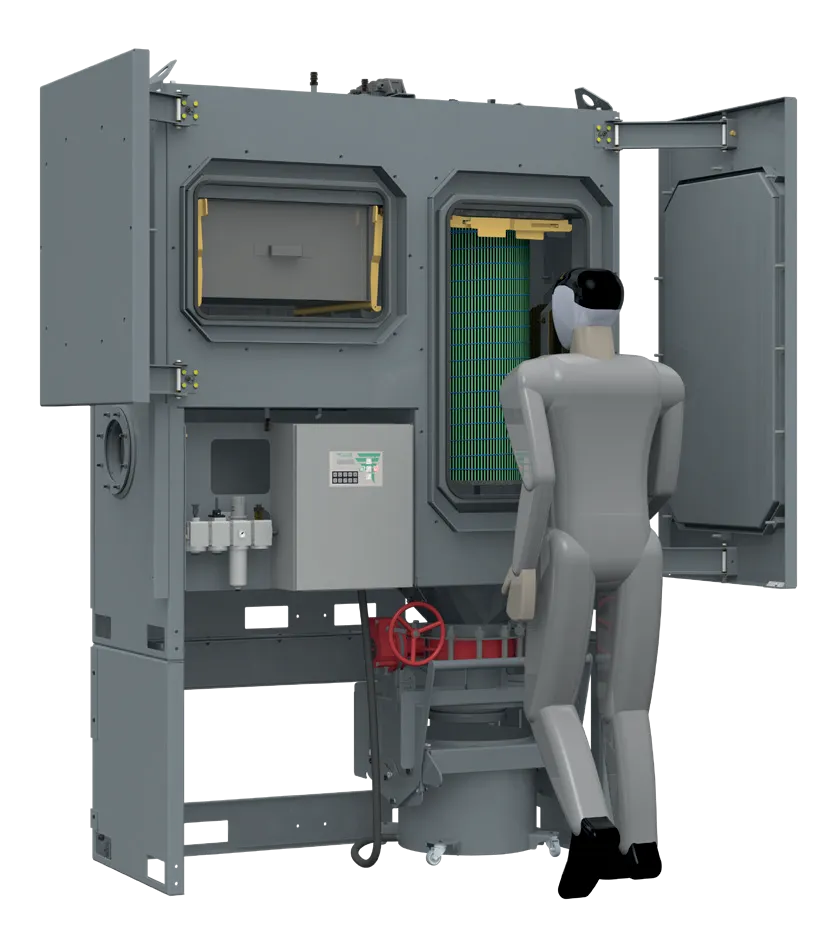
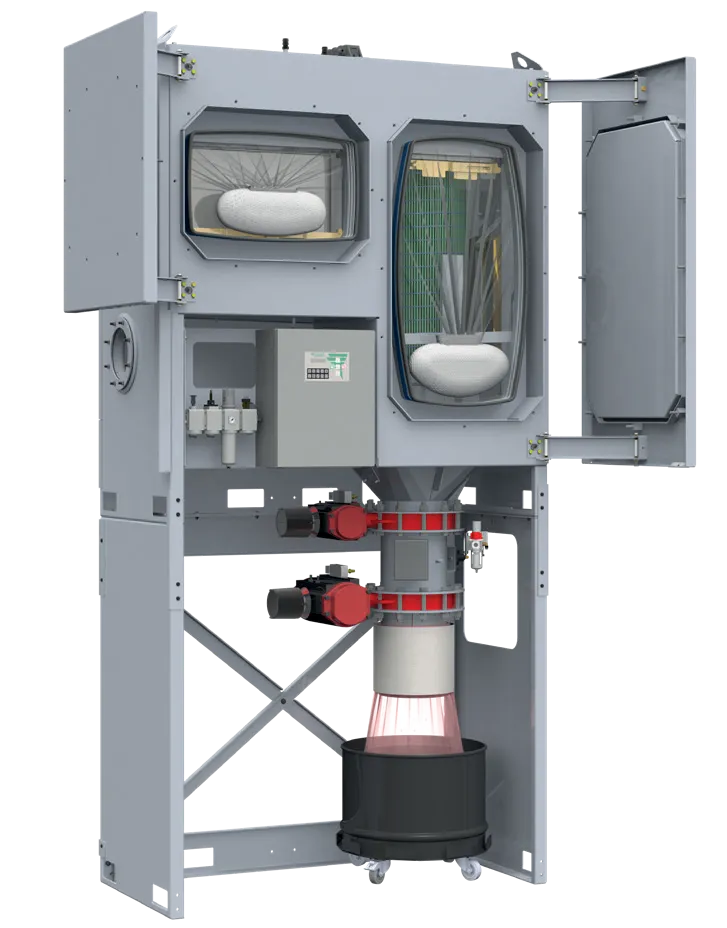
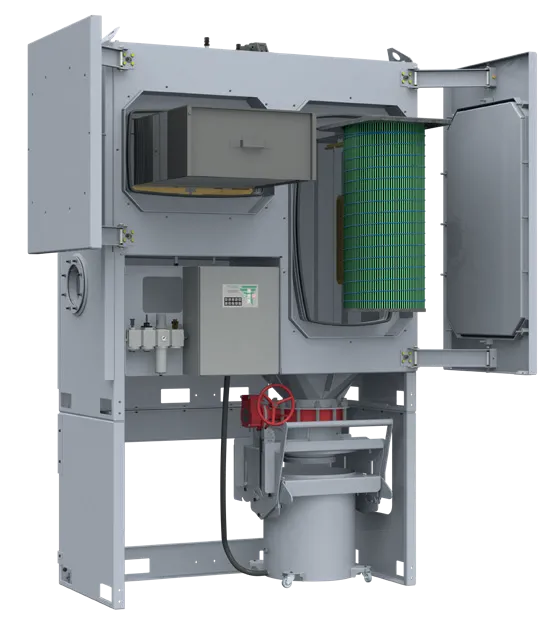
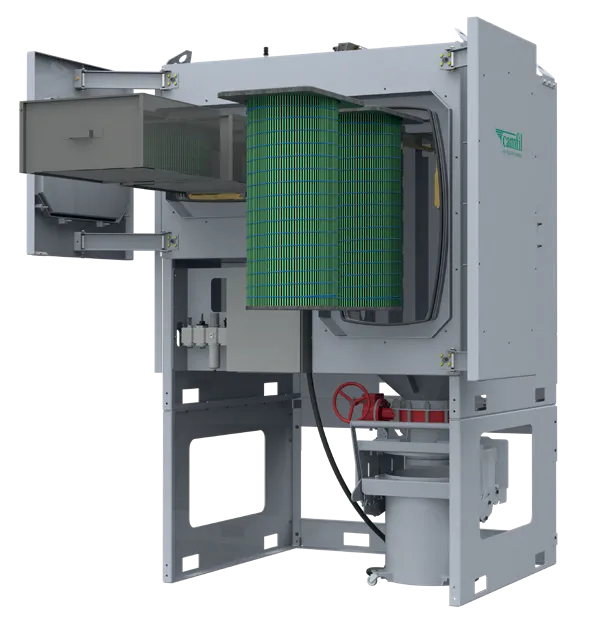
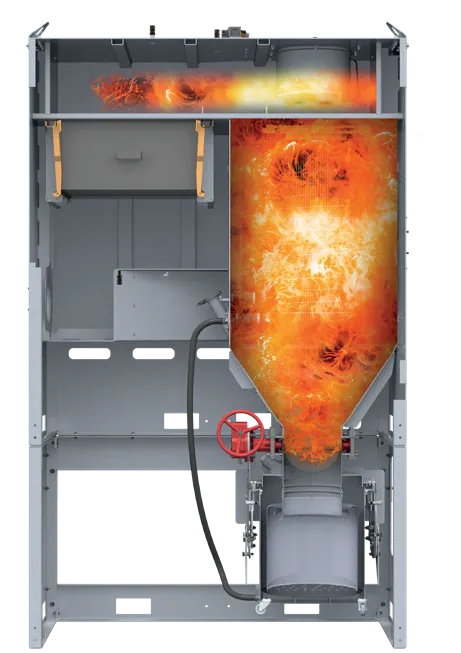
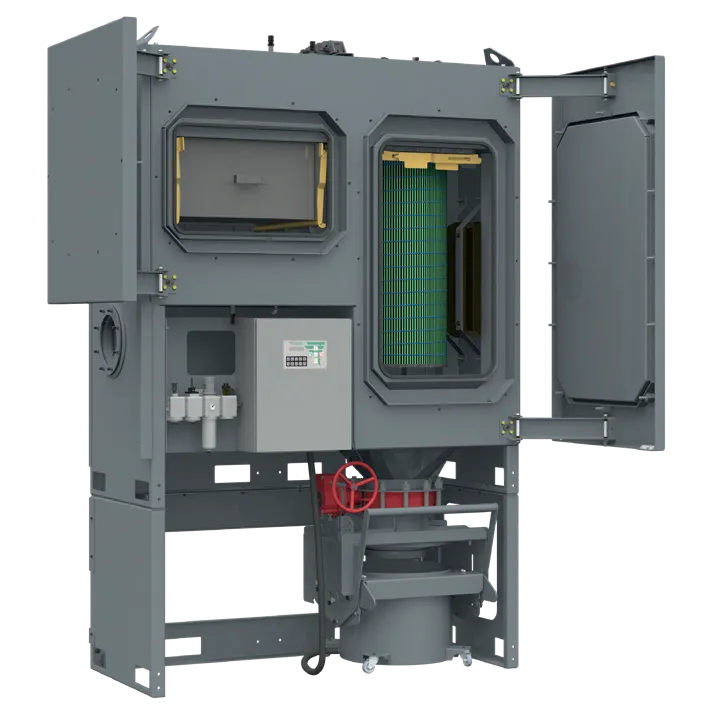
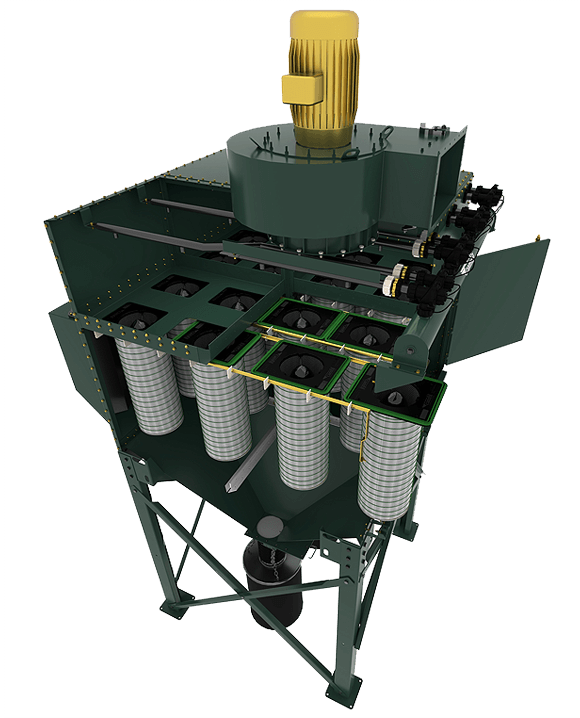
The Gold Series X-Flo industrial dust collector is a modular fume extraction system designed to handle toxic and combustible fumes. The system can be sized according to application requirements while maintaining a compact footprint.
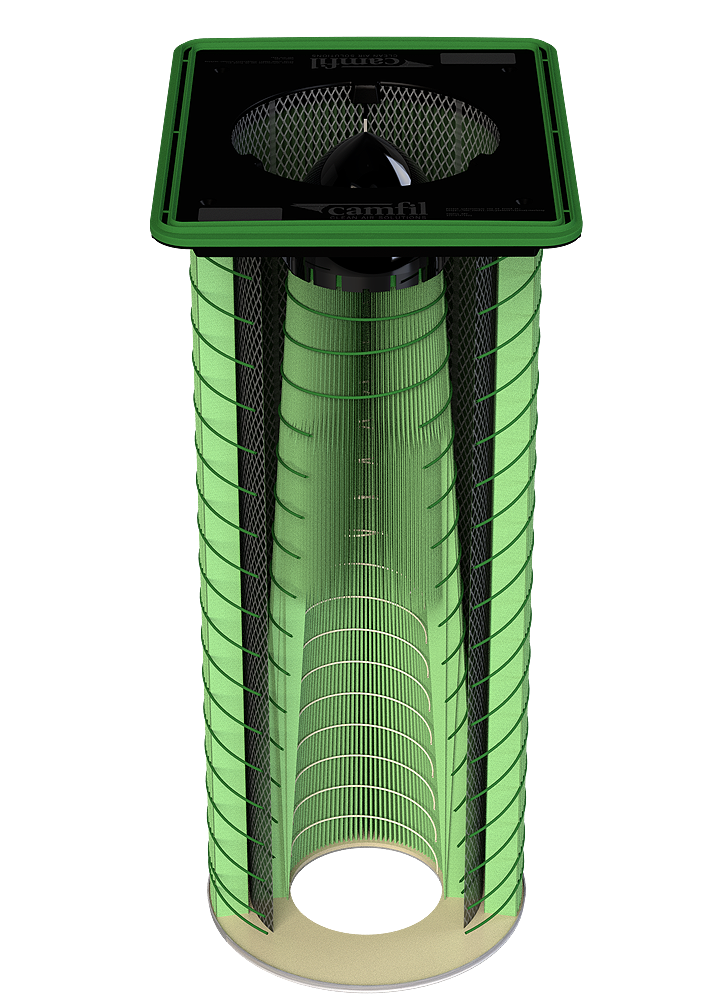
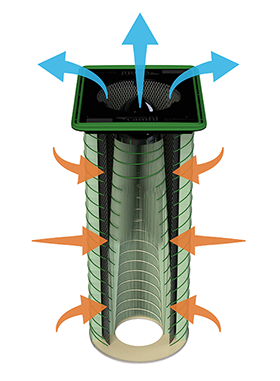
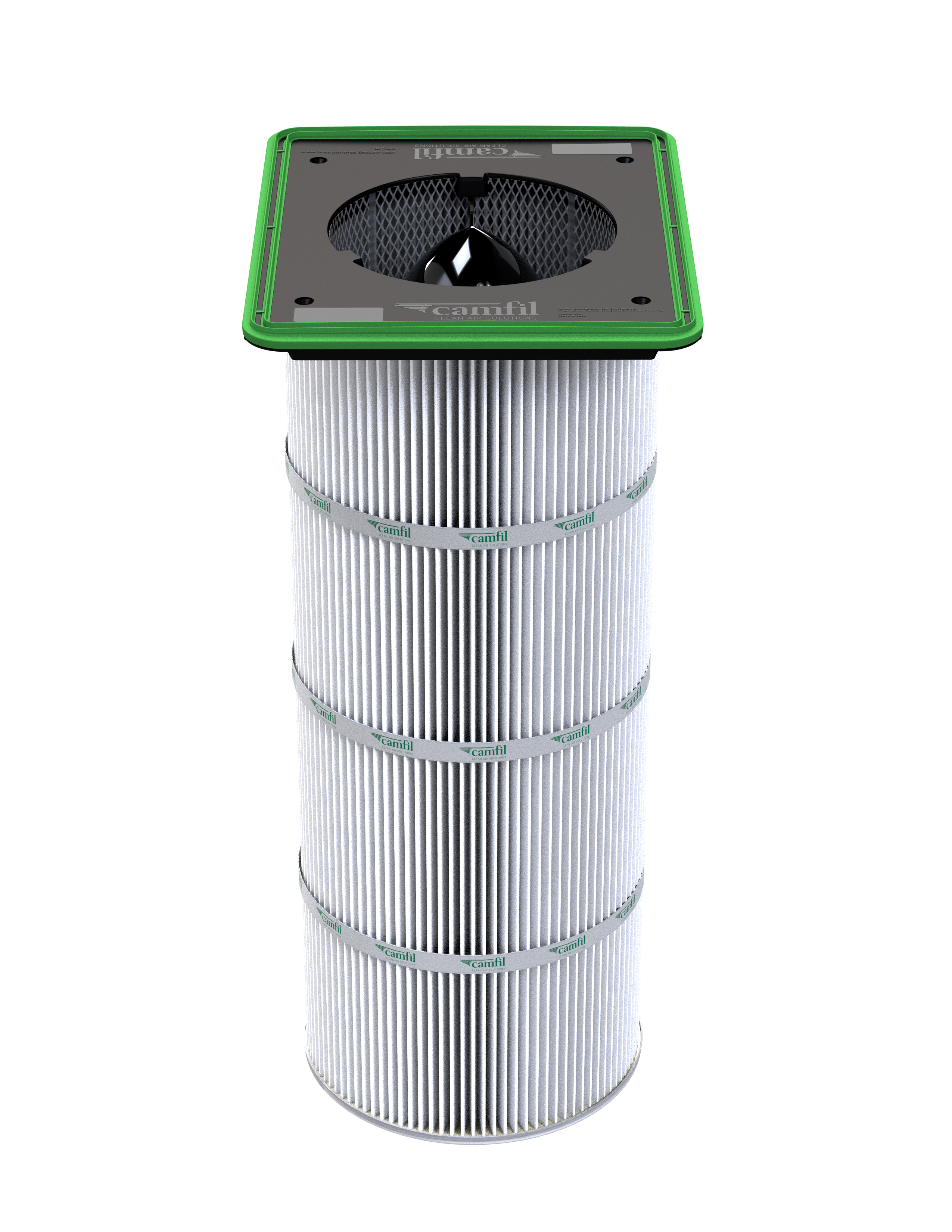
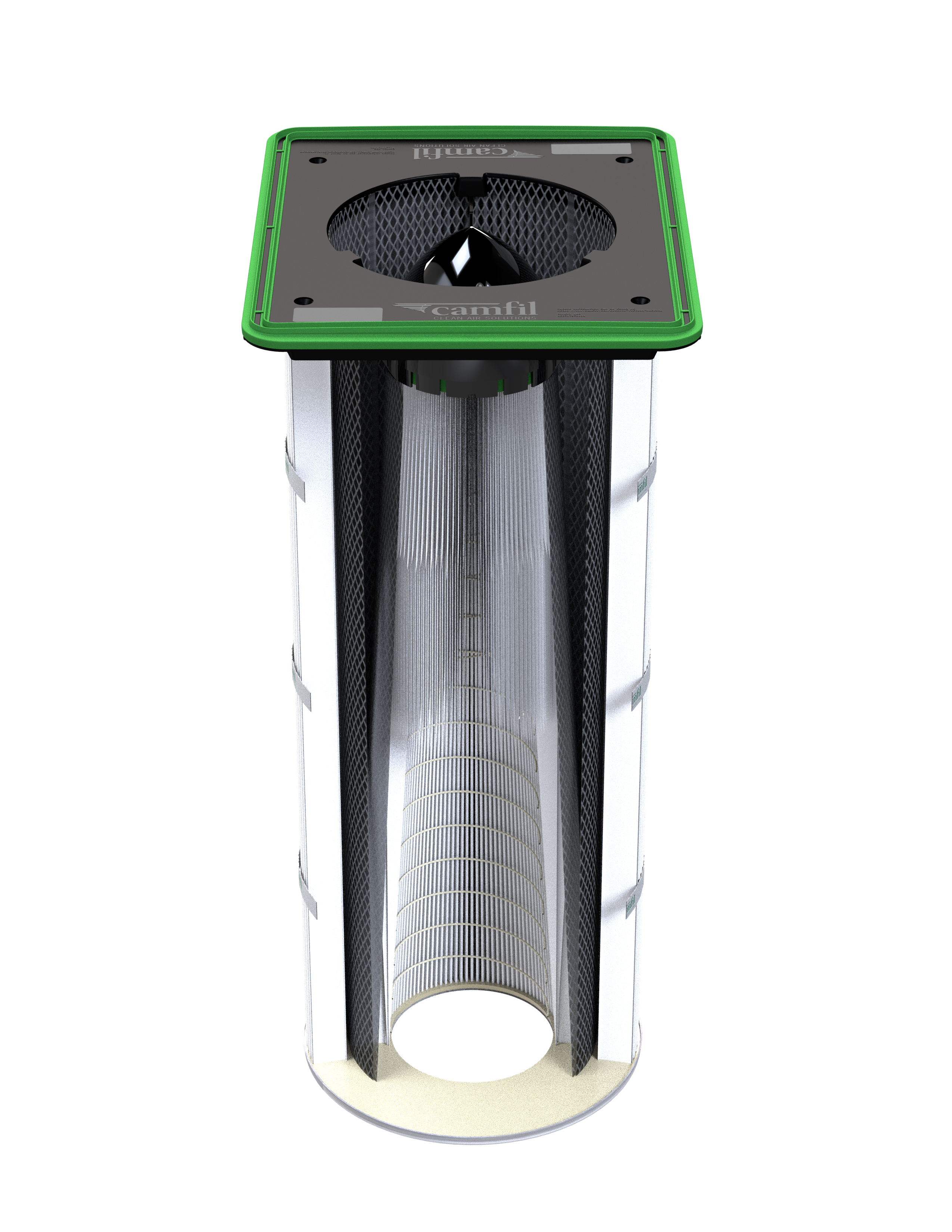
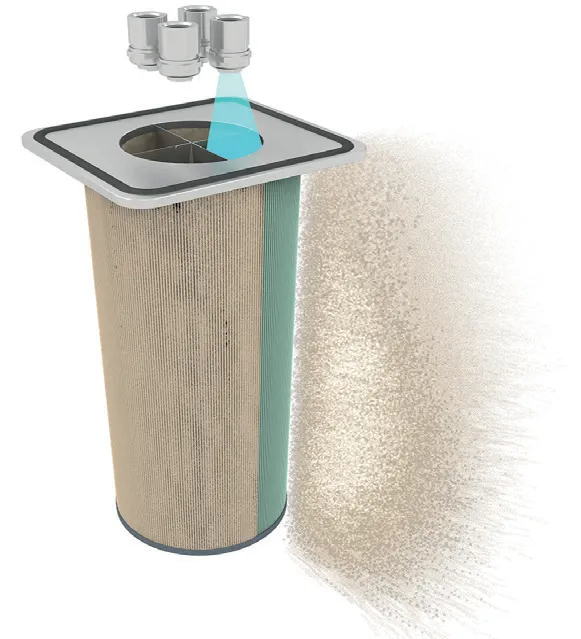
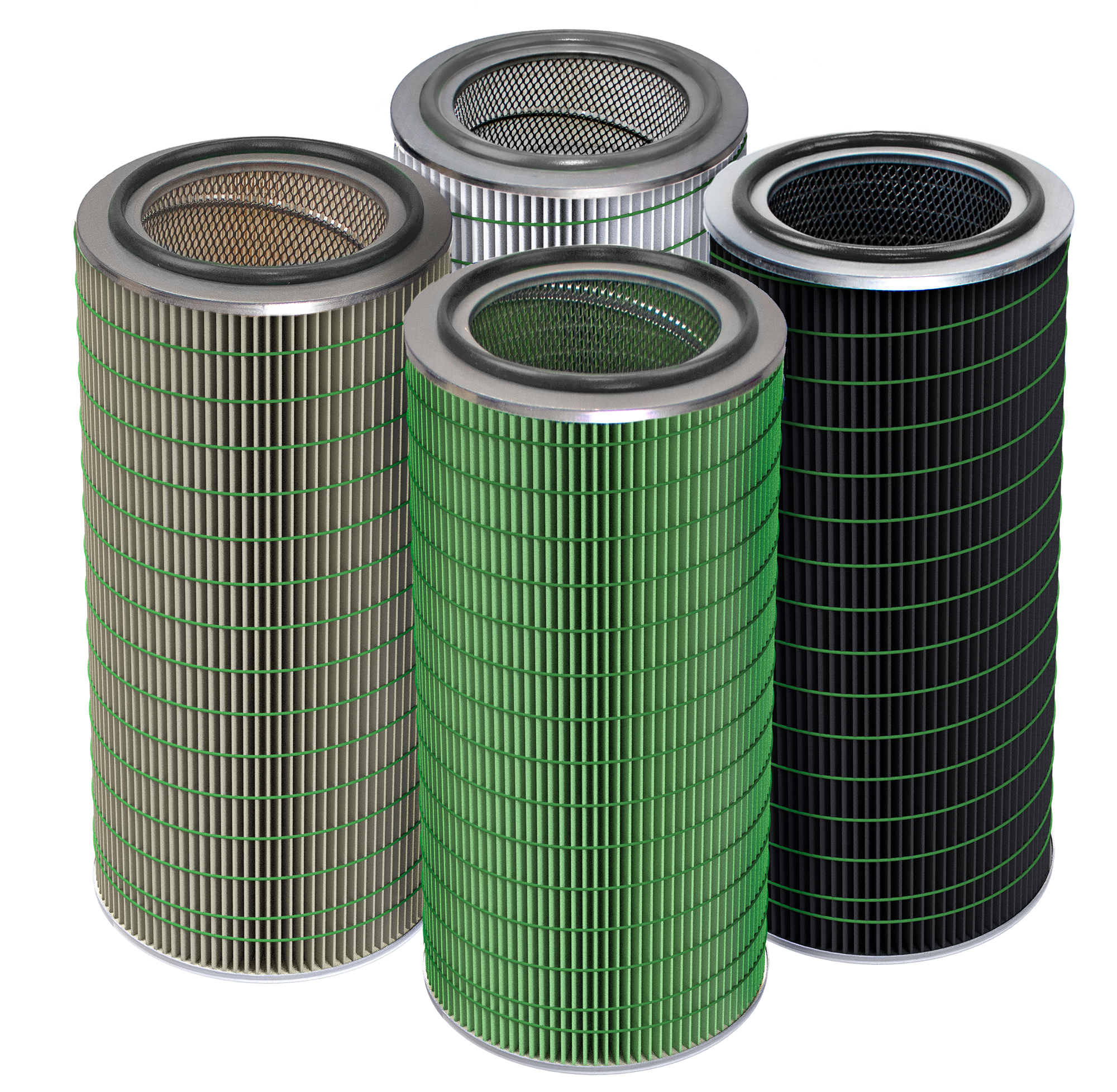
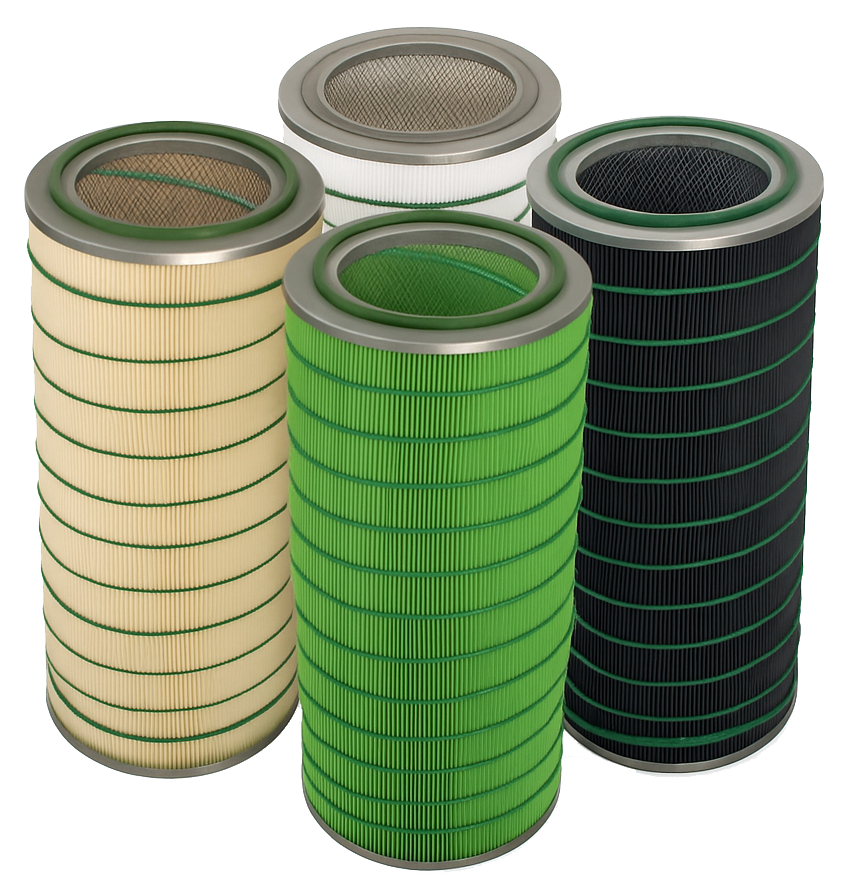
Each housing module accommodates four OptiCone filter cartridges that contain pleated filter media that maximize exposure of filter media to the airstream, allowing dust to load across the filter and release during pulse cleaning.
For facilities requiring centralized welding fume extraction, a modular collector can be configured around the application's airflow, particulate and space requirements.
 With filtration efficiencies up to MERV 15, facilities can meet or exceed OSHA indoor air quality standards for most metal dusts.
Gold Series X-Flo Package System
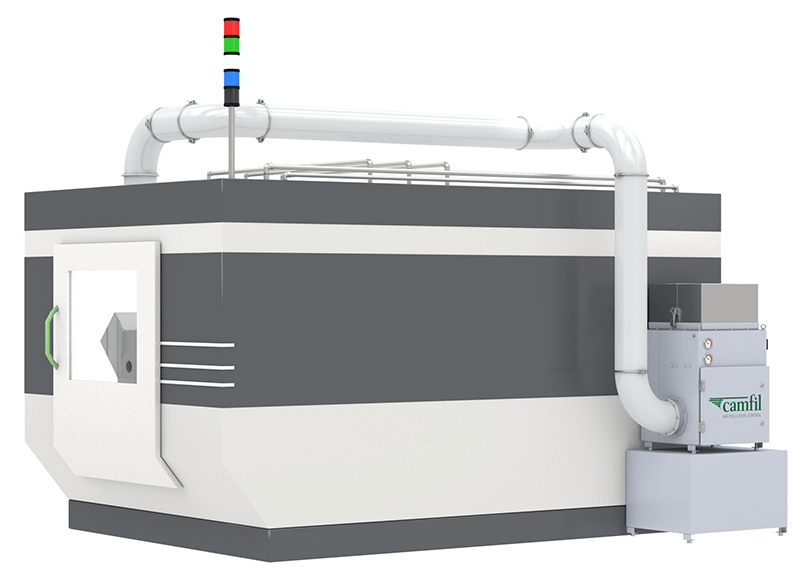
Camfil also offers the Gold Series X-Flo Package (GSXP) System
for plasma and laser cutting applications. The system is designed to control smoke and help maintain clean operating conditions. It is prewired for integration into cutting lines, with internal electrical connections, controls and accessories prepared for operation.
Units can handle airflow requirements up to 3,000 cfm using two, four or six OmniPleat extreme filter cartridges, depending on required airflow.
Choosing the Right Welding Fume Extraction System
Selecting the right welding fume extraction system requires more than choosing a collector based on airflow alone. The system must be properly sized and designed for the specific metalworking process and the characteristics of the fumes and particulate being generated.
Important factors to consider include:
- Type of welding, cutting or metalworking process
- Metals and consumables being processed
- Amount and characteristics of the generated fumes
- Required airflow and capture velocity
- Source-capture versus ambient collection requirements
- Filter efficiency and cleaning performance
- Available facility space
- Portability or flexibility requirements
- Spark and fire risks
- Combustible dust considerations
- Applicable OSHA, EPA and other regulatory requirements
Because particle properties, airflow and loading rates vary widely among applications, a welding fume extraction system should be engineered for the specific process rather than treated as a one-size-fits-all solution.
A Camfil product expert can help determine the appropriate fume collection system and filter configuration for your application.
Learn more about Camfil fume extraction or contact an expert to discuss your welding fume extraction requirements.
Read how Dust collector eliminates downtime issues on high demand robotic welding.